AN HENWYN BYGHAN
THE SMALL NAMES
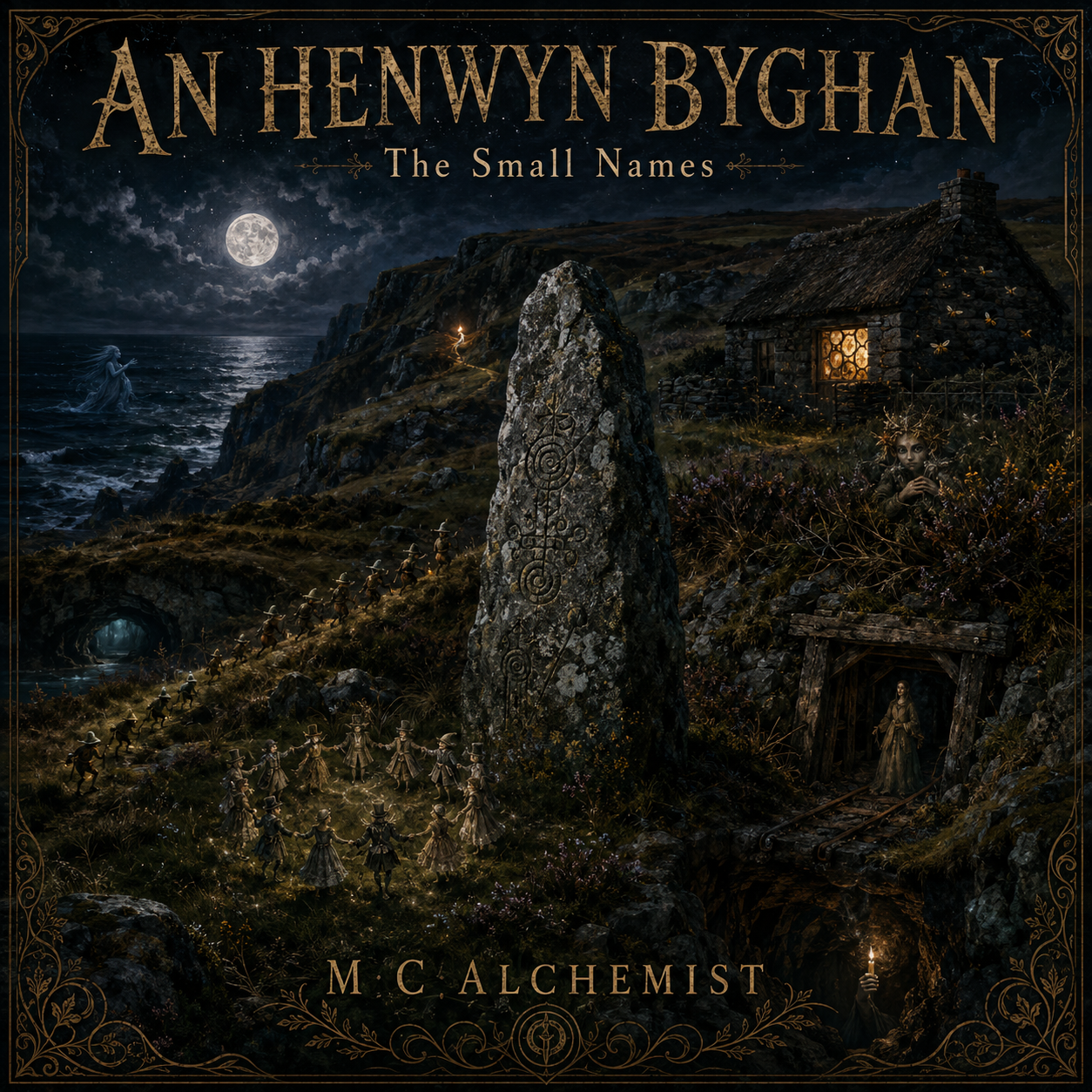
M C ALCHEMIST
- An Henwyn Koth (The Old Names / The Map)
- Gwedha an Henwyn Byghan (Speak the Small Names)
- Browney (Guardian of the House and the Bees)
- Skillywidden (The Name That Calls Him Home)
- Colman Grey (The Third Calling)
- Dicky Danjy (The Name in the Hollow)
- An Bobel Vean (The Small People)
- Meryons (The Ant-People)
- An Hooper (The Hooper)
- Joan an Vaglen (Joan the Wad)
- Dorcas (The Voice in the Mine)
- An Dorn Marow (The Dead Hand)
- Ni a Glevas (We Heard Them)
ARCHIVE RECORD: AN HENWYN BYGHAN // THE SMALL NAMES
An Henwyn Byghan is built around a simple idea: beings that are no longer named become smaller in memory, then vanish from it. The album therefore treats remembrance as an active practice. To speak a small name is not merely to describe something old; it is to give that presence a voice, a dwelling, and a path back into human attention.
These tracks are not arranged as a bestiary. Each name shapes its own musical architecture: spoken map, choral invocation, domestic work song, nocturnal lullaby, counting song, sea-cave antiphon, circular dance, shrinking vocal miniature, maritime warning, torch procession, unstable mine-song, atonal chamber lament, and final polyphonic response.
The identities are sometimes uncertain because Cornish folklore itself is untidy. A name may belong to a being, a warning, a place, a custom, or the story attached to all of them. Rather than forcing each presence into a rigid species, the album remembers its territory, work, sound, danger, and relationship with people.
FIELD NOTES:
An Henwyn Koth:
A spoken map made from Cornish landscape words. Carn, cove, well, mine, heath, valley, stone, and sea become a mnemonic terrain in which shapes wait for voices.
Gwedha an Henwyn Byghan:
The collective invocation. Names are spoken slowly and with care, because a name can be key, path, light, warning, and a doorway through which an answer may return.
Browney:
A household and hive guardian remembered through copper vessels, bread, honey, bees, fire, and practical work. The house continues to remember after people have forgotten.
Skillywidden:
A fairy child sheltered in a human house hears the name that belongs to him. The distant call crosses the gorse and opens the path home.
Colman Grey:
A strange child found upon a stone remains silent until a voice calls his name three times. At the third summons he answers his father and vanishes through the keyhole.
Dicky Danjy:
An uncertain name attached to a dark cliff hollow. Keeper, inhabitant, warning, doorway, and cave become impossible to separate as the tide enters.
An Bobel Vean:
The Small People dance in a moonlit circle: beautiful, communal, ancient, and best observed from a respectful distance. Dawn ends the music without farewell.
Meryons:
The Ant-People move in a long line through grass, soil, root, and stone. Voices and instrumentation diminish until people, memory, and name become almost too small to hear.
An Hooper:
A call travels through mist and surf at Sennen. Whether apparition, warning, or guardian of the sea-road, the Hooper keeps the living upon firm ground.
Joan an Vaglen:
Joan the Wad carries her torch through Polperro wind and rain. Her light may guide a traveller home—or choose another road entirely.
Dorcas:
A female voice rises from water, stone, timber, and mineral veins in Polbreen Mine. Dorcas may be ghost, knocker, warning, or the mine itself remembering its name.
An Dorn Marow:
A dead hand carries a candle along a wet mine ladder without arm or body. The moving light is an omen, and every rung retains the memory of a fall.
Ni a Glevas:
The album’s voices gather without becoming a conventional medley. The names are spoken one last time, and the human answer is simple: we heard them.
SPEAK THE SMALL NAMES, OR THE SMALL NAMES DISAPPEAR.
The prologue establishes Cornwall itself as an archive. The land holds forms before human
speech gives them names; the invocation then calls those names into sound. Every subsequent
track grants one presence a distinct musical body.
The closing piece does not claim that the beings have been explained. It claims only that
they have been heard. That distinction matters: remembrance is not ownership, and speaking
a name is also an acceptance that something may answer.
Gwedha an henwyn byghan.
Speak the small names.
// END OF RECORD
NI A GLEVAS
We heard them.
Sustain the Archive