The Pluto image that missed Pluto
The Pluto image that missed Pluto
A small bit of astronomical archaeology from 2009, finally sorted out in 2026.
While rebuilding my old Solar System pages I went digging through the astronomy archive and found a square colour image saved on 23 August 2009. It was labelled simply Pluto. Slightly less helpfully, it had somehow ended up amongst a batch of Uranus images.
I remembered taking remote-telescope images of Pluto around that period, and the square format and familiar-looking vignetting made me suspect that this one had come from a robotic telescope in the Canary Islands. Unfortunately the JPG had lost the useful metadata, so seventeen-year-old memory was doing rather too much of the evidential work.
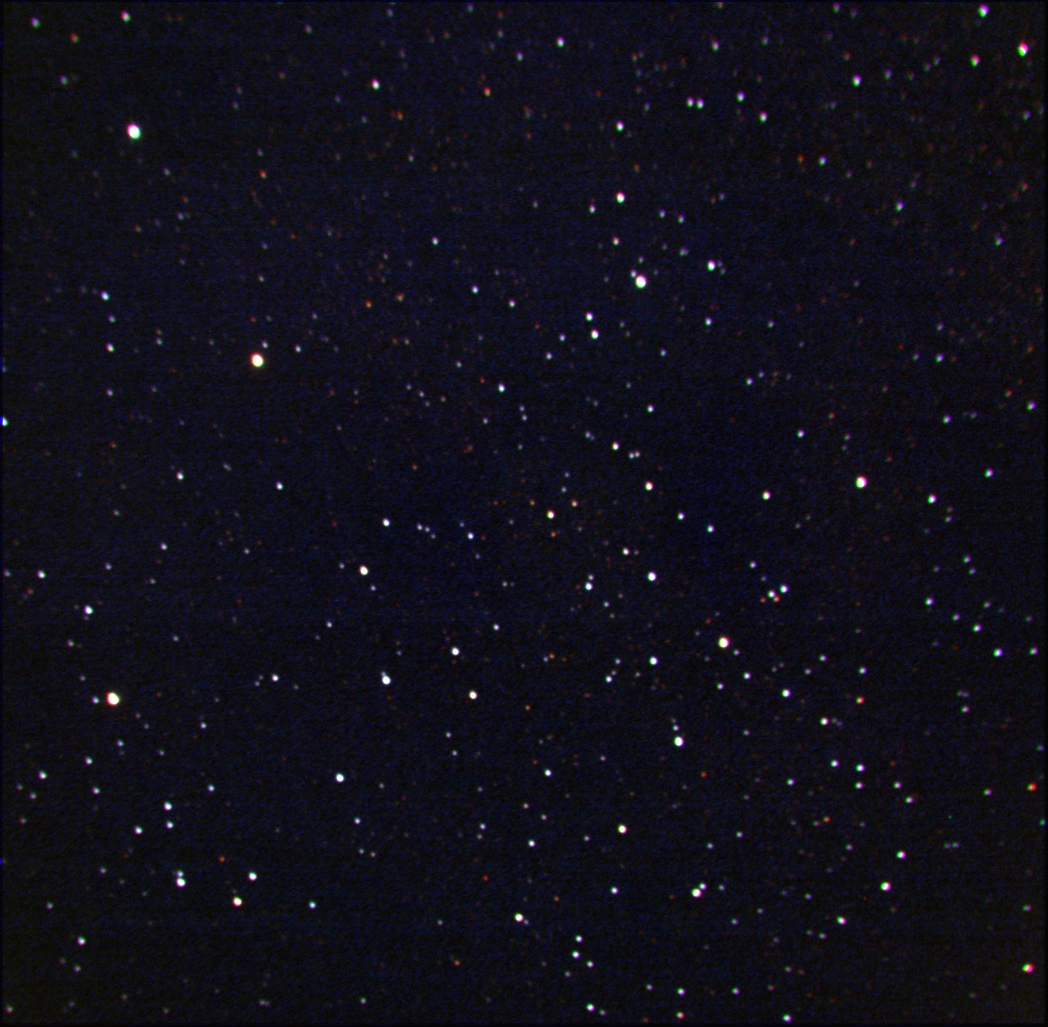
The mystery image: archived as “Pluto”, saved 23 August 2009.
Was there another frame to blink?
There was a second colour JPG which at first looked promising. Comparing the star patterns showed that it was not another night's exposure at all: it is the same underlying field, vertically flipped and processed a little differently. So there was no convenient pair of images in which Pluto could reveal itself by moving against the stars.
Why Pluto still seemed plausible
A basic sky-chart check was encouraging. In late August 2009 Pluto was in Sagittarius, against the extremely crowded Milky Way star fields. Uranus was in a completely different and much less crowded part of the sky. So the sheer number of stars in the mystery image fitted a Pluto pointing much better than a Uranus one; the Uranus folder was looking increasingly like a filing accident.
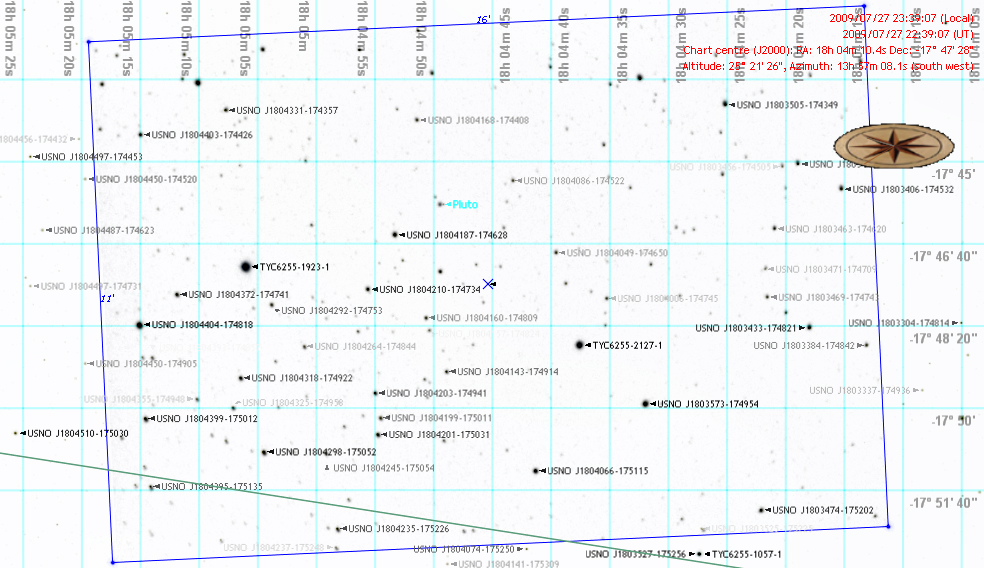
I also had an entirely separate and unambiguous Pluto observation from 27 July 2009, made remotely with Gianluca Masi's Bellatrix Observatory / Virtual Telescope. That surviving image, finder chart and raw FITS files at least confirmed that Pluto really was on my observing menu at about the same period.
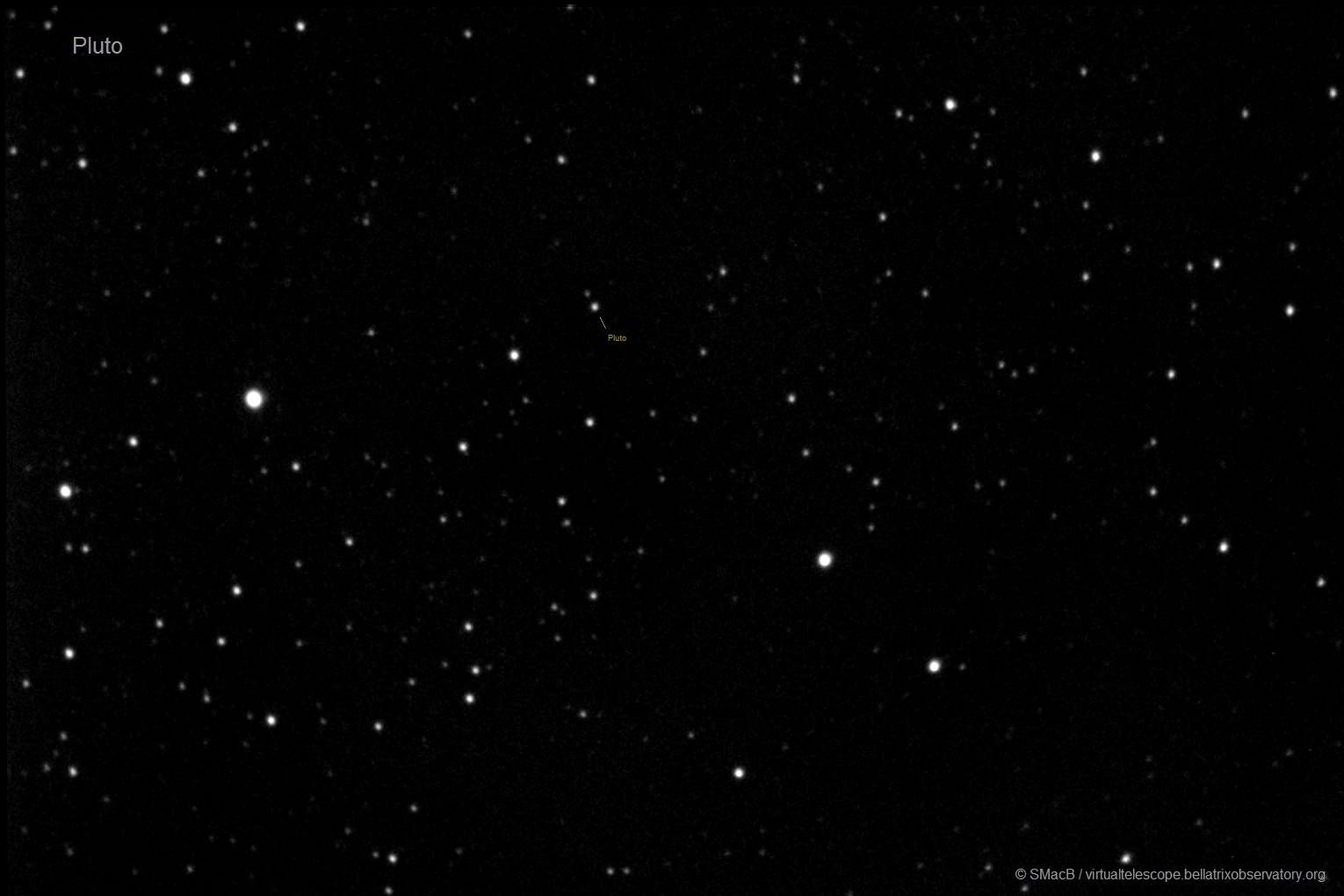
The easy one: a confirmed Pluto observation from Bellatrix Observatory, 27 July 2009.
Contemporary finder chart for the Bellatrix observation .
The Canary Islands clue
The old Bradford Robotic Telescope at Mount Teide was an especially interesting candidate. Its Galaxy camera used a 1024 x 1024 CCD and had a field of roughly 24 arcminutes square. My surviving JPG is about that shape and scale, and the vignetting looked familiar. None of that proves the provenance, but it was a rather good fit with what I remembered.
Using TheSkyLive, I reconstructed the sky from the Teide area for 22 August 2009. Pluto was indeed sitting in the rich Sagittarius field one would expect.

Sky reconstruction from the Teide area, 22 August 2009.
Plate solving the photograph
The full-sky chart could tell me that the image looked plausible, but not which 25 arcminutes of sky were actually in the JPG. For that I uploaded the original image to Astrometry.net.
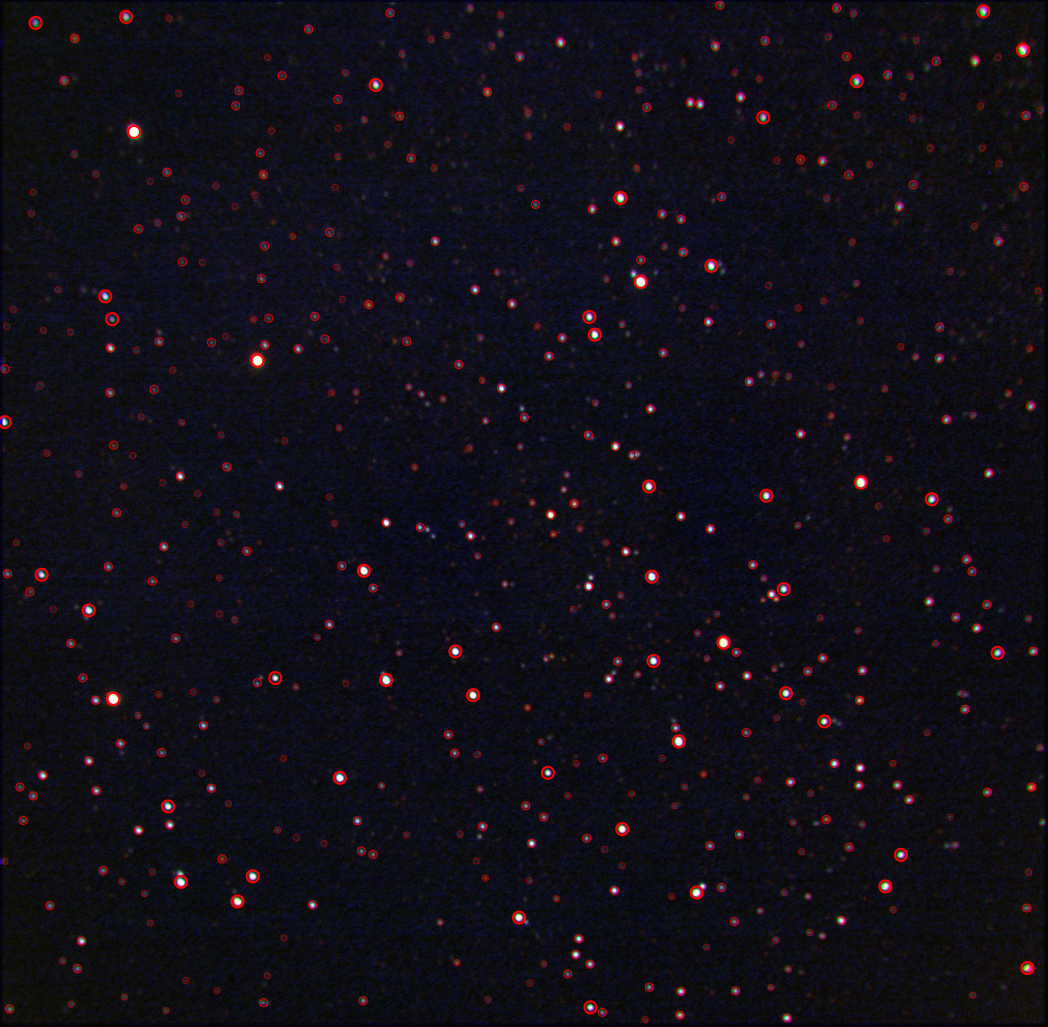
It solved successfully as job 16631442, detecting 624 stars. The solution was:
Centre:      RA 18h 02m 34.564s
             Dec -18° 08' 27.386"   (J2000)

Field size:  24.9 x 24.4 arcmin
Pixel scale: 1.43 arcsec/pixel
Orientation: 4.7 degrees E of N
That field size was a particularly satisfying clue: the independently solved 24.9 x 24.4 arcminute field is almost exactly what I had been expecting from the old square robotic-telescope camera.
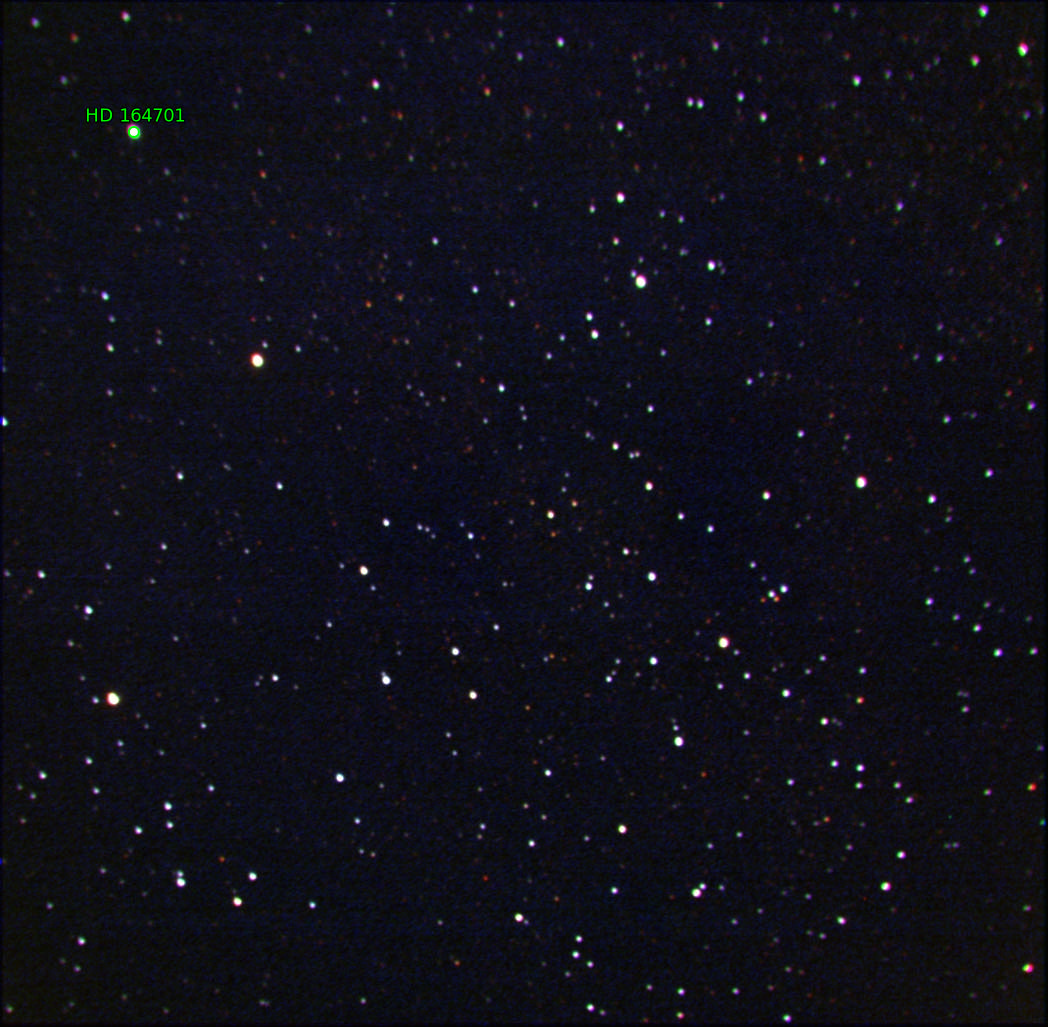
Astrometry.net identified the field; HD 164701 is labelled here.
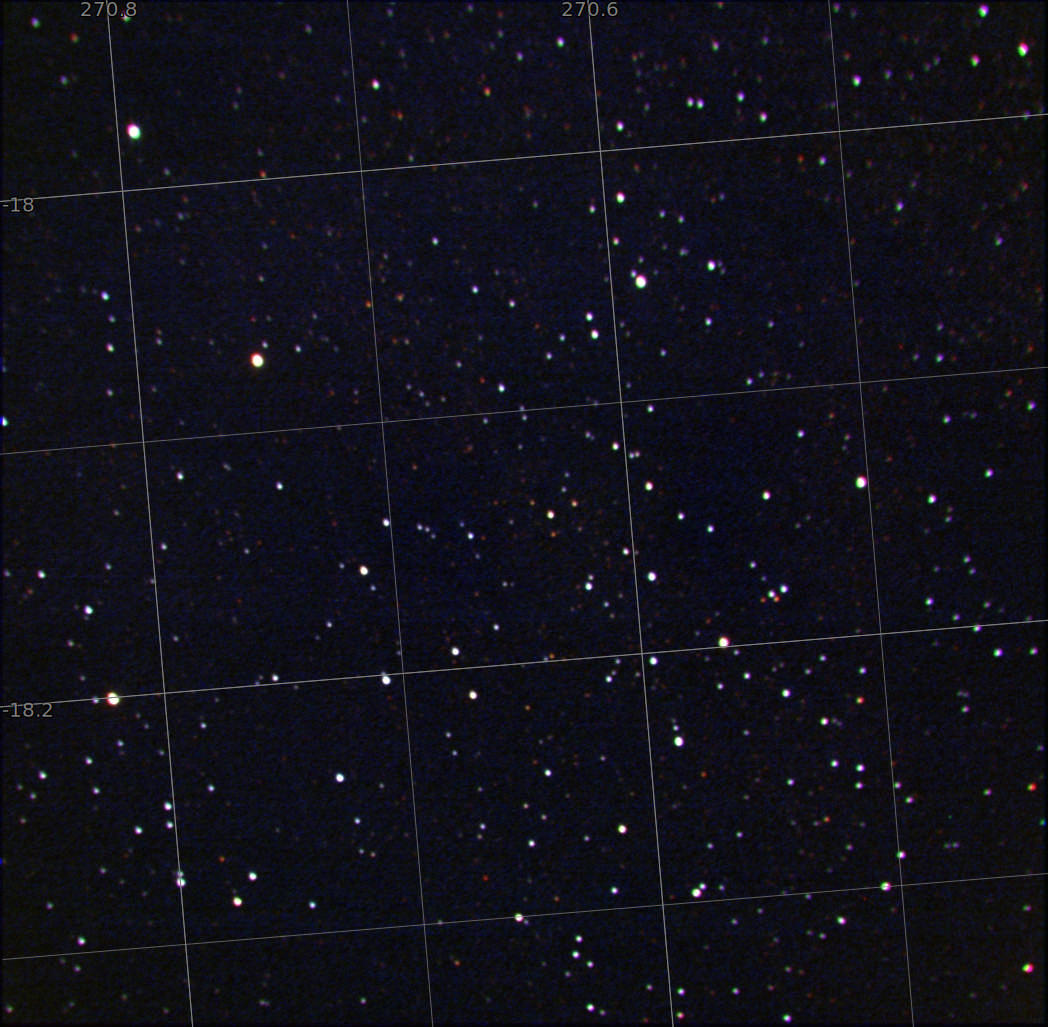
The same image with the solved J2000 coordinate grid.
The solver's source-detection overlay is also available here.
So... where was Pluto?
There was one small trap in the detective work. The first sky-chart coordinates I had been looking at were apparent coordinates, while the Astrometry.net WCS solution is J2000. Comparing those numbers directly is not quite apples with apples. Once both were put on the same J2000 frame, the result became rather amusing.
At about 22 August 2009 Pluto was at roughly RA 18h 02m 33.6s, Dec -17° 52' 05". The photograph is centred at RA 18h 02m 34.6s, Dec -18° 08' 27".
In other words, the right ascension was almost spot on. The telescope was simply pointing about 16.4 arcminutes too far south. With a frame only 24.4 arcminutes high, Pluto sat roughly four arcminutes beyond the northern edge. Close enough to explain the label; not close enough to appear in the picture.
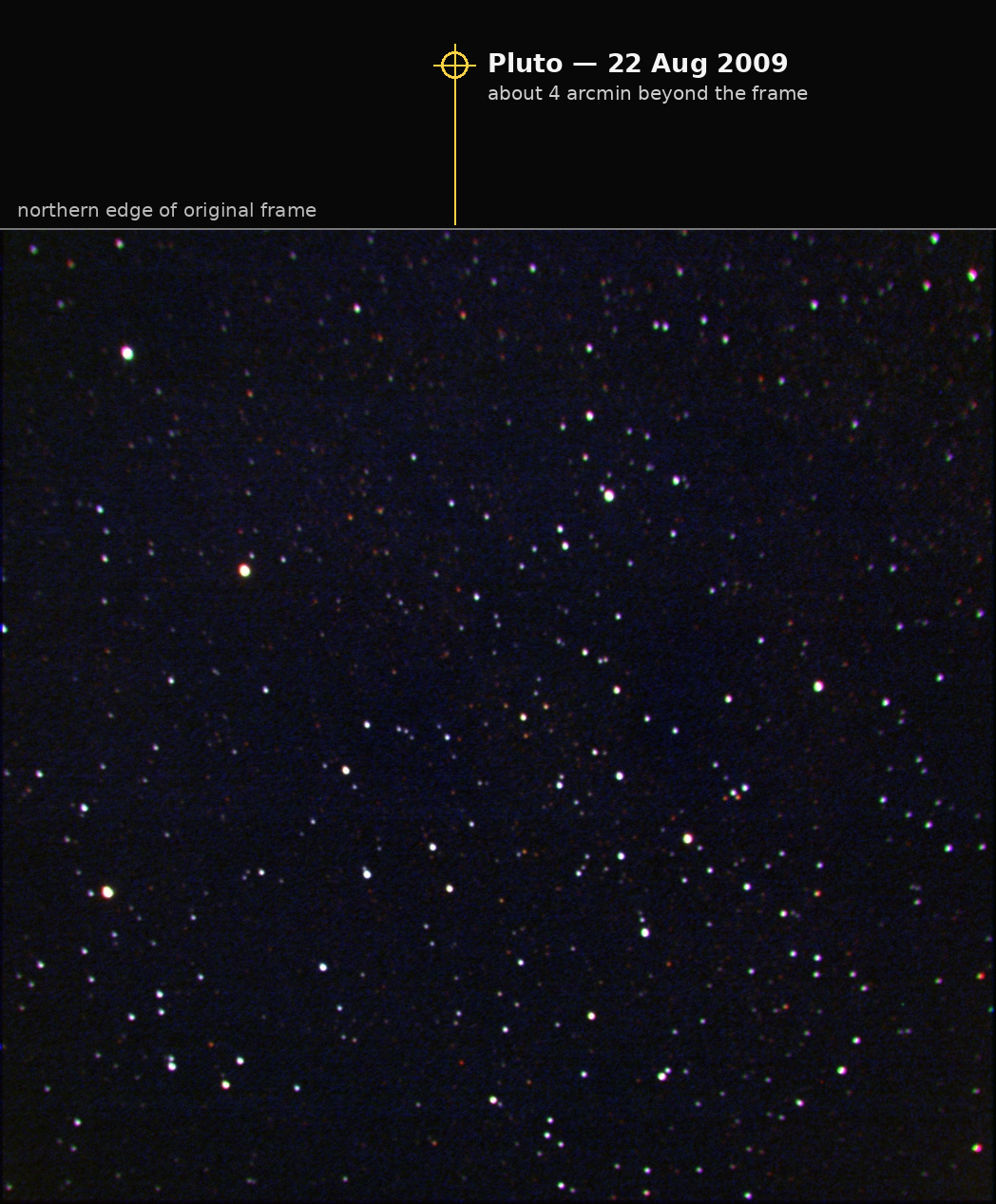
The original field extended northwards to show where Pluto actually lay on 22 August 2009 — tantalisingly close, but about four arcminutes beyond the edge of the photograph.
Checking the immediately preceding August dates did not rescue it: going backwards moved Pluto farther away from this fixed field. The same pointing would only have caught Pluto in early September, by which time this JPG had already been saved.
Verdict
So this is not actually a photograph of Pluto. It is very plausibly a photograph intended to be of Pluto, pointed tantalisingly close to the correct place.
The provenance remains slightly less certain. The square format, vignetting, my surviving memory, and especially the independently solved 24.9 arcminute field all fit the old Bradford Robotic Telescope / Teide setup remarkably well, but without the original metadata I cannot quite promote “probably” to “definitely”.
How it ended up in the Uranus folder is an easier astronomical problem: Past Me filed it there.
Supporting files
For anyone wishing to inspect the plate solution rather than take the above archaeology on trust:
- WCS solution
- Solved FITS image with WCS
- Detected image sources converted to RA/Dec
- Reference-star RA/Dec table
- Detected source X/Y table
- Image/reference correspondences
External tools and context: Astrometry.net · TheSkyLive · OpenScience / former Bradford Robotic Telescope